Category Archives: News

Puzzles

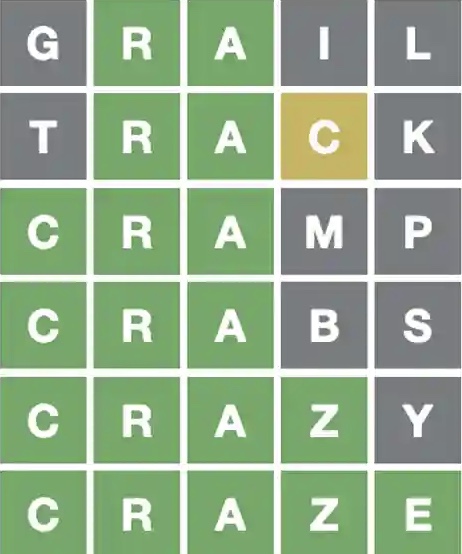
The latest puzzle craze is Wordle. Of course, it is a CSP (constraint satisfaction problem), see here. As was the Sudoku puzzle craze, see here. As are so many puzzles, from crossword puzzles to logic puzzles.

If you think this is all just fun and games, check out this paper on Fast and Flexible Protein Design Using Deep Graph Neural Networks. From the summary:

“Protein structure and function is determined by the arrangement of the linear sequence of amino acids in 3D space. We show that a deep graph neural network, ProteinSolver, can precisely design sequences that fold into a predetermined shape by phrasing this challenge as a constraint satisfaction problem (CSP), akin to Sudoku puzzles.” 

Photo: Josh Wardle (in The Guardian)

Congratulation to Barry O’Sullivan

Congratulations to Barry O’Sullivan, who has been elected a Fellow of the Association for the Advancement of Artificial Intelligence!

“Each year the AAAI recognizes a group of individuals who have made significant, sustained contributions to the field of artificial intelligence through the continuation of its Fellows program.

The AAAI Fellows Program, as originally chartered, honors a small percentage of the AAAI membership. Fellows are recognized as having unusual distinction in the profession.”

Barry, from the School of Computer Science & IT, University College Cork, Ireland, will be the first entry in the list of Elected AAAI Fellows noting an Irish affiliation at the time of election.

I Spy With My Little Eye

A golden age of surveys/overviews may be upon us. I’ve just added three new items to the Surveys, Overviews, Bibliographies section of the Constraints Resources site. And they deal with the hot AI topics of learning and explanation.

Explanation in Constraint Satisfaction: A Survey. Sharmi Dev Gupta, Begum Genc and Barry O’Sullivan. Proceedings of the Thirtieth International Joint Conference on Artificial Intelligence

End-to-End Constrained Optimization Learning: A Survey. James Kotary, Ferdinando Fioretto, Pascal Van Hentenryck and Bryan Wilder. Proceedings of the Thirtieth International Joint Conference on Artificial Intelligence

An overview of machine learning techniques in constraint solving. Andrei Popescu, Seda Polat-Erdeniz, Alexander Felfernig, Mathias Uta, Müslüm Atas, Viet-Man Le, Klaus Pilsl, Martin Enzelsberger & Thi Ngoc Trang Tran.  Journal of Intelligent Information Systems

Opportunities

This looks like a great research program that Ferdinando Fioretto is advertising a Ph.D. position for:

A Ph.D. opening is available for candidates interested in the intersection of deep learning and combinatorial optimization. The position will start in January 2022. Topics of interest include: – Supervised Learning for speeding up the resolution of constrained optimization problems; – Reinforcement Learning for dynamic and combinatorial problems; – Graph Neural Network models for graph-structured constrained optimization problems; – Theoretical guarantees for ML-enhanced constraint optimizers; – Physics informed deep learning; The project will combine fundamental aspects of optimization, constrained reasoning, and learning to develop integrated optimization and learning systems. The ideal candidate will have a strong background in mathematics and optimization theory and a strong interest in machine learning and constraint reasoning. Students who majored in Computer Science, Mathematics, Statistics, or Physics are welcome to apply. An MS degree and/or publications in leading international venues will be an advantage. TO APPLY: Applications should be submitted at ffiorett@syr.edu and candidates should include their statement of purpose, resume, and transcript (if available).

Similarly for this assistant professor opening at TU Eindhoven:

As a successful applicant, you will work on the interface between Artificial Intelligence and decision-making methods. Examples of research directions include but are not limited to: using machine learning (such as predictive modelling and reinforcement learning) to find better solutions to optimization problems, developing decision support tools that combine data-driven models with knowledge-based models. With an embedding of the position in the school of Industrial Engineering, special attention will be paid to applications of the methods and tools in domains such as logistics, transportation, service industries, high-tech manufacturing, and healthcare.

Great to see these positions that resonate with the Pursuit of the Holy Grail.

Call for Submissions to PTHG-21

PTHG-21: The Fifth Workshop on Progress Towards the Holy Grail

October 25th, 2021, at CP2021

This Workshop is one of a series.

Note: CP2021 and its workshops are virtual, with free registration.

Description:

In 1996 the paper “In Pursuit of the Holy Grail” (also here) proposed that Constraint Programming was well-positioned to pursue the Holy Grail of computer science: the user simply states the problem and the computer solves it. It was followed about a decade later by “Holy Grail Redux“, and then about a decade after that by “Progress Towards the Holy Grail“. This series of workshops aims to encourage and disseminate progress towards that goal, in particular regarding work on automating:

  • Acquisition: user-interaction, learning, debugging, maintaining, etc. 
  • Reformulation: transformation for efficient solution, redundant models, etc. 
  • Solving: adaptive parameter tuning, automated selection from portfolios, learning heuristics, deep learning, etc. 
  • Explanation: reasons for failure, implications for choices, etc. 

Of particular interest is the intersection of the Holy Grail goal with the increasing attention being paid to machine learning, explainable AI, and human-centric AI.

Organizing Committee:

Chair: Eugene Freuder, University College Cork, Ireland, eugene.freuder@insight-centre.org 

Christian Bessiere, University of Montpellier, France 

Tias Guns, KU Leuven, Belgium 

Lars Kotthoff, University of Wyoming, USA  

Ian Miguel, University of St Andrews, Scotland  

Michela Milano, University of Bologna, Italy 

Helmut Simonis, University College Cork, Ireland 

Submissions:

Submissions may be of any length, and in any format. They may be abstracts, position papers, technical papers, or demos. They may review your own previous work or survey a topic area. They may present new research or suggest directions for further progress. They may propose research roadmaps, demonstration domains, or collaborative projects. They may be proposals for measuring progress, and, in particular, for data sets or competitions to stimulate and compare progress. 

Previously Published Track. Authors are encouraged to submit to this track pointers to relevant papers that they have published elsewhere since the date of the last workshop, PTHG-20, September 7, 2020. The objective is to further the Workshop goal of disseminating progress in this area. 

Submissions should be emailed, in PDF form, with subject line “PTHG-21 Submission”, directly to the Workshop chair, at: eugene.freuder@insight-centre.org.

Submissions to the Previously Published Track should be in the form of a PDF that clearly identifies it as a submission to the Previously Published Track, contains bibliographic information on the previous publication, and provides a URL pointing to the paper (if possible without violating copyright, to a full version of the paper).

Authors may make multiple submissions if they wish. All submissions that appropriately address the topic of the workshop will be accepted as is, without further revision, and will be made available at the workshop website.

The deadline for submissions is September 15, 2021. Decisions on acceptance will be sent by September 20, 2021. 

Authors of accepted submissions will be expected to upload a video presentation of the requested length by September 30, 2021; otherwise the submission will be withdrawn from the program and proceedings (if any). The conference will host these videos. Details of the upload process will become available. 

Website: PTHG-21: The Fifth Workshop on Progress Towards the Holy Grail

Classification and Acquisition

Classifier-based constraint acquisition, Prestwich, Freuder, O’Sullivan and Browne, Annals of Mathematics and Artificial Intelligence, has been published and is available online.

Modeling a combinatorial problem is a hard and error-prone task requiring significant expertise. Constraint acquisition methods attempt to automate this process by learning constraints from examples of solutions and (usually) non-solutions. Active methods query an oracle while passive methods do not. We propose a known but not widely-used application of machine learning to constraint acquisition: training a classifier to discriminate between solutions and non-solutions, then deriving a constraint model from the trained classifier. We discuss a wide range of possible new acquisition methods with useful properties inherited from classifiers. We also show the potential of this approach using a Naive Bayes classifier, obtaining a new passive acquisition algorithm that is considerably faster than existing methods, scalable to large constraint sets, and robust under errors.

Impact

I recently connected, via Linkedin, with the Director of Constraint Programming Research and DevelopmentI at Oracle. He told me that the Dynamic CSP features of Oracle’s Solver are based on concepts presented in some papers I wrote years ago with a student, Dan Sabin. I promptly passed that info on to Dan.

I believe this sort of “knowledge transfer” or “impact” often “flys under the radar”. Aside from patent or paper citations there is no formal mechanism for acknowledging such influence. I would encourage folks in industry to take a moment now and then to send a note to academics, or speak with them at a conference, and let them know that their work has been helpful. This is gratifying and useful for academics, and, who knows, might encourage further productive interaction.